Showing posts with label myth. Show all posts
Showing posts with label myth. Show all posts
Monday, September 22, 2008

Friday, September 19, 2008
Tuesday, September 16, 2008
Monday, September 15, 2008
Friday, September 12, 2008
LVV Gods
Ashley Cho- Hera
Onvit Kwon- Zeus
Johee Kim- hades
Erica Kim appollo
charles kim- hermes
For your chosen God: this should be a powerpoint presentation,should be 5 minutes should have pictures and include a handout on your god with questions and facts relating to your presentation.
• Greek name
• Image source
• Roman name
• Other names and epithets
• Responsibilities
• Attributes
• Sacred site(s)
• Animal
• Tree
Onvit Kwon- Zeus
Johee Kim- hades
Erica Kim appollo
charles kim- hermes
For your chosen God: this should be a powerpoint presentation,should be 5 minutes should have pictures and include a handout on your god with questions and facts relating to your presentation.
• Greek name
• Image source
• Roman name
• Other names and epithets
• Responsibilities
• Attributes
• Sacred site(s)
• Animal
• Tree
Wednesday, September 10, 2008
Monday, September 8, 2008
Saturday, August 9, 2008
Classical Civilization (LVV4U)
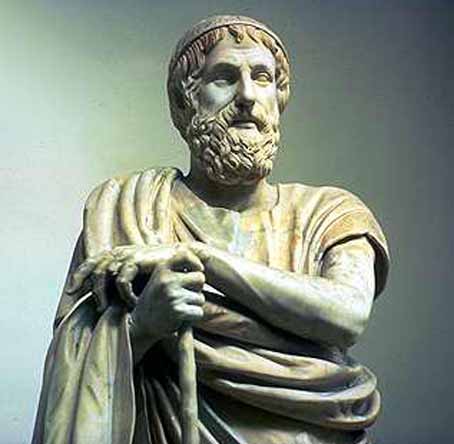
Course Description
This course allows you to explore the beliefs and achievements of the classical world, which have shaped Western thought and civilization. You will investigate such aspects of classical culture as its mythology, art, literature, and philosophy, as well as elements of ancient Greek and Latin, through a variety of activities such as dramatizations, audio-visual presentations, and discussions.
By reading classical authors in English and examining archaeological evidence, yous will enhance both your communication skills and your ability to think critically and creatively.
The knowledge students gain of the literature, mythology, and art as well as of the commercial and social practices of ancient civilizations enables them to better appreciate and respect their own heritage and that of others.
The discoveries of archaeology have contributed significantly to our knowledge of the geography and history of the Classical world as well as to our understanding of its culture, particularly its art and architecture. For this reason, archaeology and its developments play an important part in Classical studies.
Unit 1 – Early Greece
The investigation of Bronze Age A: Classical Theories of the Origins of the Universe
This section introduces students to the geography, chronology, and mythology associated with ancient Greek theories of the origins of the universe, using such sources as Hesiod and Homer. The concepts of myth (e.g., what is myth?), pre-history, and the genealogy of the gods are explored.
B: The Minoans
In this section, students are introduced to the art, architecture, and archaeology (including the excavations of Arthur Evans) of the Minoan civilization. Minoan culture, aspects of religion, and the correlation with later Greek mythology and civilization are also explored. In addition, the theories regarding the fall of Minoan civilization after the eruption of Thera are discussed.
C: The Mycenaeans
The culture of the Mycenaeans is explored here through their architecture, related mythology, and the archaeological evidence of Mycenaean sites including tombs and artifacts. In addition, their connection to other cultures within the Mediterranean world at this time is explored, as well as their influence on later Greek civilization.
D: The Trojan War
Course Evaluation:
This course combines various forms of evaluation allowing each student to create work that contains their own creativity and ingenuity. The course is divided into 5 units and each unit contains several assignments, projects and occasionally tests and quizzes. Students will also be required to complete a major essay project and a final examination worth 30% on your final grade. The breakdown of your final grade is shown below.
Grade Breakdown:
Tests (Knowledge, Inquiry, Application)
15%
Assignments/Projects (Knowledge, Inquiry, Communication, Application)
35%
Journal Entries (Knowledge, Inquiry, Communication)
10%
Oral Presentations (Knowledge, Inquiry, Communication)
10%
Final Examination (Knowledge, Inquiry, Communication, Application)
30%
TOTAL
100%
Check this website for the myths you are looking at today!!!!!!
Tuesday, April 8, 2008
Exam Friday

Definitions that could be on the exam:
Epic
Agora
Hubris
Apotheosis
Forsaken
Dissension
Naos
Essay topics that could be on exam:
Creation myths
Vengeance work in the epic Odyssey.
The heroic code in The Iliad and The Odyssey.
A legacy of ancient
Today we will examine the legacies of ancient Greece.
Ancient Greeks believed in the concept of "two worlds" – an "earthly" world and a "spiritual" or "supernatural" world peopled by identities that interacted very closely with the humans of the "earthly" world. Find evidence online in image form to back up this statement.
- Music was an important part of Greek life.
- The Greeks were fierce warriors.
- The Greeks did not value luxury items.
- The Greeks were a seafaring people.
- Order, balance, and symmetry are important ideals shaping Greek architecture.
- Greek sculpture does not portray emotion.
- Role of women in Ancient Greek life
- The interaction of the Ancient Greeks with nature (animals, birds, foliage, farming)
- Relationships between the Gods and humans
- What are some things that seem to be particularly valued in Ancient Greek life?
- Evidence of a well-developed level of technology
- Social interactions (class structures?)
Theater,TechnologyFashion,Music and Dance,Architecture and Sports.
Thursday, March 20, 2008
Jewelry in Ancient Roma
 The Etruscans lived in Etruria (western Tuscany, Italy) and were a non Italic people whose culture was based largely on the Greek culture. The Etruscans had a profound influence on the Romans from the 7th century BC to the 5th century BC. They were eventually overcome by the Romans in the 4th and 3rd centuries BC.
 Jewelry (joias) is a fascinating fashion accessory that has been popular from ancient times.
It has played a variety of roles including political, religious and ornamental, and jewelry artefacts have helped modern historians shape pictures of the daily lives of ancient civilisations.
It has played a variety of roles including political, religious and ornamental, and jewelry artefacts have helped modern historians shape pictures of the daily lives of ancient civilisations.
Jewelry in ancient Rome is no exception. There are literary accounts and picture such as in the Regina tombstone, plus lots of other artefacts available that help us to understand the role jewelry played during this fascinating time.
Regina Tombstone
This tombstone shows Regina sitting in a wicker chair with her jewellery box and basket of wool beside her. Regina came from southern Britain and was the slave, and later the wife, of Barates from Syria.
From Jane Won ^ _^ ♡♡♡♡♡♡♡♡♡♡♡♡♡♡♡♡♡♡♡♡♡♡♡♡♡♡♡♡♡♡♡♡♡♡♡♡♡♡♡♡♡♡♡♡♡♡♡♡
Thursday, February 28, 2008


Wednesday, February 27, 2008
History Night
Ok for tonight we will start with this GAME
Then you can examine these powerpoint presentations
Then we can play this Jeopardy
Plus you have an online quiz today based on everything on the website....ya everything
You also have your Hercules Project
And you have your comic book
ALL TODAYYYYY!!!!!!!11
Then you can examine these powerpoint presentations
Then we can play this Jeopardy
Plus you have an online quiz today based on everything on the website....ya everything
You also have your Hercules Project
And you have your comic book
ALL TODAYYYYY!!!!!!!11
Monday, February 25, 2008
TROY

Try this quiz on Troy
Try another Quiz :)
Use this website as a background on the Film
Literary works are divided into various categories called genres in accordance with their characteristic form and content. The Iliad belongs to the genre of epic.
When you first read the Iliad, the beginning of the poem can present some difficulty because it assumes a general familiarity with the war between the Trojans and Greeks that most modern readers, unlike the ancient Greeks, do not possess.
The code which governs the conduct of the Homeric heroes is a simple one. The aim of every hero is to achieve honor, that is, the esteem received from one's peers. Honor is essential to the Homeric heroes, so much so that life would be meaningless without it. Thus, honor is more important than life itself.
A hero's honor is determined primarily by his courage and physical abilities and to a lesser degree by his social status and possessions. The highest honor can only be won in battle.
The GODS resemble human beings and tend to act in a human way, displaying all human emotions, virtues and vices. Their anthropomorphism is further illustrated by the patriarchal organization of the divine family, which imitates the patriarchy of human society.
When you attempt a character analysis,(which you will be presenting on THURSDAY) there are a number of things that you must take into consideration. The personality of any character is revealed in what the character says, thinks and does, and what other characters and the author in his own person say about that character. Although the evaluation of the personality of a character is most important in a character analysis, you should not neglect physical appearance and condition, which also can have an important effect on character and action.
The word 'tragedy' primarily used of a dramatic work, that is, a play in which a central character called a tragic protagonist or hero suffers some serious misfortune which is not accidental and therefore meaningless, but is significant in that the misfortune is logically connected with the hero's actions. 'Tragedy' and its adjective 'tragic', however, can be used of any literary work containing a protagonist whose actions lead to disaster for himself and others.
Questions for Today:
Why are the Greeks and Trojans fighting?
What is the cause of the fight between Agamemnon and Achilles?
Which gods fight for the Greeks? Which fight for Troy? Why?
What is Achilles’ reaction after Patroclus’ death?
How does Achilles honor Patroclus and dishonor Hector?
What are the results of Priam’s meeting with Achilles? Why?
Contrast Hector and Achilles. Which do you like better? Why?
Here is a list of characters in The Illiad
And this will be hard but try this quiz on The Illiad the book The Movie Tory is based on.
These questions can be done in pairs and must be written down or emailed to me .
Project:Research a character from Troy and make sure you relate most of these points in your presentation.
• physical traits - what the character looks like, how he/she dresses, how he moves
• psychological/personality traits
• motivation
• behavior /actions
• relationships - with other characters in the story, how others see/react to him/her
• weaknesses/faults
• strengths/virtues
• moral constitution - often a character will agonize over right and wrong
• protagonist/antagonist - does the story revolve around this character’s actions?
• complex/simple personality
• history and background
• change - has the character changed during the course of the story? What was his/her
motivation? Why?
• similarities and differences of the characters
• Does the character have a function in the story?
I will be using this rubric to grade your presentations.
Presentation Troy
1. DueThursday
2. One character from Troy
3. 3 -5 Minutes
4. In 'your own' words!
5. Mustbe posted to website
6. Must have handout for class (x10)
7. Handout must have some sort of related quiz
(eg. Crossword, fill in blank etc)
2. One character from Troy
3. 3 -5 Minutes
4. In 'your own' words!
5. Mustbe posted to website
6. Must have handout for class (x10)
7. Handout must have some sort of related quiz
(eg. Crossword, fill in blank etc)
Saturday, February 23, 2008
heracles
Heracles
In Greek mythology, Heracles or Herakles ("glory of Hera", or "Glorious through Hera," Alcides (original name) "Ἥρα + κλέος, Ἡρακλῆς)" was a divine hero, the son of Zeus and Alcmene, nephew of Amphitryon[1] and great-grandson of Perseus. He was the greatest of the Greek heroes, a paragon of masculinity, the ancestor of royal clans who claimed to be Heracleidae and a champion of the Olympian order against chthonic monsters. In Rome and the modern West, he is known as Hercules, with whom the later Roman Emperors, in particular Commodus and Maximianus, often identified themselves. The Romans adopted the Greek version of his life and works essentially unchanged, but added anecdotal detail of their own, some of it linking the hero with the geography of the Central Mediterranean. Details of his cult were adapted to Rome as well.
Extraordinary strength, courage, ingenuity, and sexual prowess with both males and females were among his characteristic attributes. Although he was not as clever as the likes of Odysseus or Nestor, Heracles used his wits on several occasions when his strength did not suffice, such as when laboring for the king Augeas of Elis, wrestling the giant Antaeus, or tricking Atlas into taking the sky back onto his shoulders. Together with Hermes he was the patron and protector of gymnasia and palaestrae.[2] His iconographic attributes are the lion skin and the club. These qualities did not prevent him from being regarded as a playful figure who used games to relax from his labors and played a great deal with children.[3] By conquering dangerous archaic forces he is said to have "made the world safe for mankind" and to be its benefactor.[4] Heracles was an extremely passionate and emotional individual, capable of doing both great deeds for his friends (such as wrestling with Thanatos on behalf of Prince Admetus, who had regaled Heracles with his hospitality) and being a terrible enemy who would wreak horrible vengeance on those who crossed him, as Augeas, Neleus and Laomedon all found out to their cost
In Greek mythology, Heracles or Herakles ("glory of Hera", or "Glorious through Hera," Alcides (original name) "Ἥρα + κλέος, Ἡρακλῆς)" was a divine hero, the son of Zeus and Alcmene, nephew of Amphitryon[1] and great-grandson of Perseus. He was the greatest of the Greek heroes, a paragon of masculinity, the ancestor of royal clans who claimed to be Heracleidae and a champion of the Olympian order against chthonic monsters. In Rome and the modern West, he is known as Hercules, with whom the later Roman Emperors, in particular Commodus and Maximianus, often identified themselves. The Romans adopted the Greek version of his life and works essentially unchanged, but added anecdotal detail of their own, some of it linking the hero with the geography of the Central Mediterranean. Details of his cult were adapted to Rome as well.
Extraordinary strength, courage, ingenuity, and sexual prowess with both males and females were among his characteristic attributes. Although he was not as clever as the likes of Odysseus or Nestor, Heracles used his wits on several occasions when his strength did not suffice, such as when laboring for the king Augeas of Elis, wrestling the giant Antaeus, or tricking Atlas into taking the sky back onto his shoulders. Together with Hermes he was the patron and protector of gymnasia and palaestrae.[2] His iconographic attributes are the lion skin and the club. These qualities did not prevent him from being regarded as a playful figure who used games to relax from his labors and played a great deal with children.[3] By conquering dangerous archaic forces he is said to have "made the world safe for mankind" and to be its benefactor.[4] Heracles was an extremely passionate and emotional individual, capable of doing both great deeds for his friends (such as wrestling with Thanatos on behalf of Prince Admetus, who had regaled Heracles with his hospitality) and being a terrible enemy who would wreak horrible vengeance on those who crossed him, as Augeas, Neleus and Laomedon all found out to their cost
Subscribe to:
Posts (Atom)